| Railway Preservation News https://rypn.org/forums/ |
|
| Seeking Advice on Tender Water Tank Coatings https://rypn.org/forums/viewtopic.php?f=1&t=49135 |
Page 1 of 1 |
| Author: | 6-ET [ Mon Mar 02, 2026 12:11 am ] |
| Post subject: | Seeking Advice on Tender Water Tank Coatings |
Hi everyone, I'm researching anti-rust coatings for the interior of the tender water tank on Ventura County Railway no. 2, which is undergoing its 1472-Serice-Day Inspection at the Southern California Railway Museum. About 20 years ago, the interior of the water tank was sprayed with a truck-bed-liner coating. It worked well, but water was able to find its way behind the liner and rusted through some of the steel tank wall. I searched through old posts on RYPN, and there are three tank coating products that seem to get mentioned. They are Apexior, POR-15, and Aquatapoxy. Many posters also give the advice that it's critically necessary to get the tank metal sandblasted to white metal in order for the coating to last. I have some questions: 1. What products have your groups tried, and what were the results? Are there other products I should consider? The posts on RYPN that discussed the products I listed above are from decades ago. 2. Are there any coatings that will provide good results when applied to steel that has been scraped and cleaned of loose rust, but that has not been sandblasted? It would be nice to avoid sandblasting the tender tank if possible. 3. I saw one post about a service that installed a plastic film liner that got expanded or "blown into" the water tank. Has anybody tried this? 4. Apexior has multiple products. Am I correct in thinking that their 3 or 3C products are the ones suitable for tender tanks? Is there a difference between them? 5. I've seen lots of positive comments about POR-15, but they have a lot of products. Which POR-15 products have other steam groups used for tender coatings? Thanks a lot! |
|
| Author: | Rollerman [ Mon Mar 02, 2026 3:33 pm ] |
| Post subject: | Re: Seeking Advice on Tender Water Tank Coatings |
Coal tar epoxy, Dampney and Rustoleum sell it, I do not know if they are the same product. The traditional tank paint Apexior #2 is worthless, been there tried it. I went with coal tar epoxy, twenty years later, it is still on. |
|
| Author: | Doug Debs 2472 [ Thu Mar 05, 2026 8:06 pm ] |
| Post subject: | Re: Seeking Advice on Tender Water Tank Coatings |
Traditional riveted rectangular water tanks are a 3-D maze of angle iron, reinforcing plates with the centers cut out for water flow, etc. Getting inside every "compartment" is difficult to impossible for normal-sized people. To get enough access for a good prep job, the best choice may be (1) remove tank from tender frame, (2) flip upside-down, and (3) cut out the tank bottom, to be replaced later with new steel, welded in place. Abrasive blasting is the most effective prep method. Abrasive blasting cleans irregular contours (angle iron edges, rivet heads, badly pitted steel), which are difficult to clean adequately with any other method. The resulting dust and broken-apart blast media are contaminated with rust, but not with lead-based paint, which makes legal disposal less costly. "Black Beauty" abrasive cuts faster and generates less dust than sandblasting-grade sand. - Doug Debs (who spent a lot of time in S.P. 2472's 10,000 gallon Vanderbilt tender water tank, removing rust with sandblasting gear and a needle scaler.) |
|
| Author: | 6-ET [ Fri Mar 06, 2026 2:37 am ] |
| Post subject: | Re: Seeking Advice on Tender Water Tank Coatings |
Hi Doug and Rollerman, Thanks for your replies! A few questions: Doug, do you remember what kind of coating was applied to 2472's tender? How well did it hold up? Rollerman, can you tell us what locomotive you used coal tar epoxy on? What surface prep did you do? Did you sandblast the tender tank? Thanks! |
|
| Author: | M Austin [ Fri Mar 06, 2026 4:37 am ] |
| Post subject: | Re: Seeking Advice on Tender Water Tank Coatings |
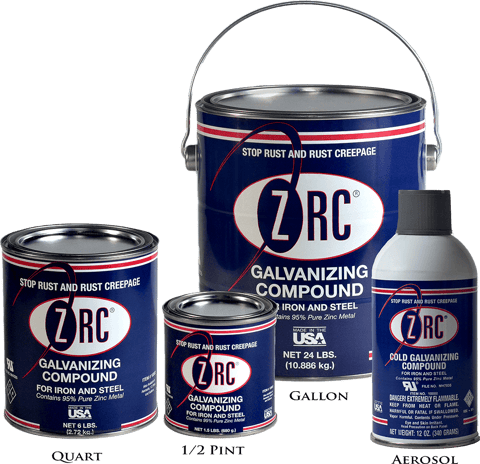
![]() ZRC LINK ZRC has been my secret since WAINIHA in 1975. Fifty-one years and still rust proof. Spray or brush over gray metal blast with acetone wipe to eliminate dust. The slickest aspect is light arc welding on the outside of the tank converts ZRC into a "hot dip" coating on the inside.
|
|
| Author: | Pat Fahey [ Fri Mar 06, 2026 1:18 pm ] |
| Post subject: | Re: Seeking Advice on Tender Water Tank Coatings |
Hi I would also contact the Strasburg, RR and ask if they used any type Tender Tank coating in there locomotives... or also they may recommend what they use,,this is just a suggestion... Pat. |
|
| Author: | Doug Debs 2472 [ Fri Mar 06, 2026 1:25 pm ] |
| Post subject: | Re: Seeking Advice on Tender Water Tank Coatings |
After needle scaling and sandblasting, plus welding in reinforcements where needed (minimal in a Vanderbilt tank), we coated the entire interior with Apexior #3. This looked great, but after we started using the tender in 1991, patches of Apexior #3 started peeling off the steel. For the second tender tank interior overhaul in 2006, our then-CMO did not want to use abrasive blasting because if any abrasive dust wasn't removed from the tank interior, and wasn't later encapsulated by the anticorrosion coating, then the loose dust could damage the locomotive injector nozzles. (In retrospect, I seriously question how much dust wouldn't have been encapsulated, but that's what we had to live with at the time.) So we used pneumatic needle scalers and large cup wirebrushes in big electric angle grinders to remove Apexior #3 and surface rust. This left surface rust in small pits in the steel where the Apexior #3 had failed. It also was an incredibly messy job because dried Aprexior #3 is a thermoplastic. The heat generated by the wirebrush trying to reach bare metal half-melted the Apexior #3 into a mist of sticky black tarry particles, which stuck to me, my clothes, face mask, goggles, adjacent steel I'd just quasi-cleaned, and everything else. After we'd done as much as we could while handicapped by the limitations of this method, we vacuumed and dusted the tank interior. The we painted it with POR-15, using paint brushes and rollers. POR-15 fumes are exceptionally toxic (isocyantes, IIRC), especially in Confined Spaces. One deep breath of these fumes instantly makes you feel awful (I know from experience). The painters were protected by "moon suits", double gloves, and supplied-air full-face masks. The air supply for this system was located upwind well away from the tender. Per Confined Space protocol, each operator had a lifeline going up to the tank hatch, where they were monitored continuously by a safety officer (me). It took nearly all day. POR-15 held up reasonably well to the very occasional use it got after that. But a few years later, small rusty spots ("freckles") were already visible where the coating "failed" because the surface really wasn't cleaned well enough first. |
|
| Author: | Rollerman [ Sat Mar 07, 2026 6:06 pm ] |
| Post subject: | Re: Seeking Advice on Tender Water Tank Coatings |
For the record, I used Rustoluem Coal Tar Epoxy on the belly tank and tender tank of my 12 ton 1922 Buffalo-Springfield steam roller. I think Coal Tar Epoxy might also be a good treatment for coal bunkers. |
|
| Author: | 6-ET [ Mon Mar 09, 2026 1:09 am ] |
| Post subject: | Re: Seeking Advice on Tender Water Tank Coatings |
Thank you everybody for your replies! It's a huge help! |
|
| Author: | warren032 [ Tue Mar 10, 2026 11:56 am ] |
| Post subject: | Re: Seeking Advice on Tender Water Tank Coatings |
Hi Dan, I would pose you look at Sanitred Permaflex product. Here is the desc from website: SANI-TRED PermaFlex™, is a liquid polyurethane coating that penetrates deeply into and will bond permanently to properly prepared concrete, wood, aluminum, steel, and some plastics, as well as most all other standard building materials. PermaFlex will never bubble, chip, peel, crack, or delaminate from vehicle traffic, exposure to extremes of ambient heat up to 250°F cold, or Negative Hydrostatic Pressure. Our PermaFlex liquid rubber coating is environmentally safe, solvent free, non-flammable, and low VOC. PermaFlex is extremely durable with 2,030 psi tensile strength. This rubber liquid sealant can be brushed, rolled or even sprayed on. It is intended to make surfaces waterproof. I have used it to seal the metal roof on my RR car project where nothing else would bond to the rusty metal. It is extremely flexible, strong, won't crack and perhaps the best part is it bonds to less than ideal surfaces. Once applied it does not want to come off. I think they sell samples. https://sanitred.com Warren |
|
| Page 1 of 1 | All times are UTC - 5 hours [ DST ] |
| Powered by phpBB © 2000, 2002, 2005, 2007 phpBB Group http://www.phpbb.com/ |
|