Like this.
| Railway Preservation News https://rypn.org/forums/ |
|
| Impressive CA&E Four Car Operating Consist At IRM https://rypn.org/forums/viewtopic.php?f=1&t=35584 |
Page 1 of 2 |
| Author: | Bruce Duensing [ Mon Sep 16, 2013 1:25 pm ] |
| Post subject: | Impressive CA&E Four Car Operating Consist At IRM |
To say this achievement ( in many aspects) is impressive is an understatement http://www.youtube.com/watch?v=MlfQYA5ZjDc |
|
| Author: | gbrewer [ Mon Sep 16, 2013 6:51 pm ] |
| Post subject: | Re: Impressive CA&E Four Car Operating Consist At IRM |
Impressive indeed. Reminds me of my youth. Remembering the 'Ror'n' Elgin http://RailroadGloryDays.com/cae |
|
| Author: | Bob Davis [ Tue Sep 17, 2013 6:32 pm ] |
| Post subject: | Re: Impressive CA&E Four Car Operating Consist At IRM |
And they can also run a three car train of CA&E steel cars, a three (and maybe four) car train of North Shore cars, assorted CTA rapid transit cars and a two car train of IC Electrics--a truly mind-boggling array of traction action. |
|
| Author: | softwerkslex [ Tue Sep 17, 2013 7:57 pm ] |
| Post subject: | Re: Impressive CA&E Four Car Operating Consist At IRM |
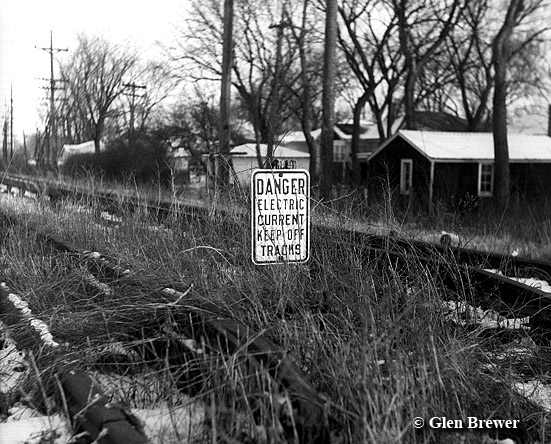
I was looking at the historic photos, and wondering, could that line still operate today with that exposed third rail? I see lots of grade crossings with sidewalks where it looks like pedestrians would be really close to an exposed third rail. |
|
| Author: | gbrewer [ Tue Sep 17, 2013 8:40 pm ] |
| Post subject: | Re: Impressive CA&E Four Car Operating Consist At IRM |
Like this.
|
|
| Author: | dinwitty [ Tue Sep 17, 2013 9:16 pm ] |
| Post subject: | Re: Impressive CA&E Four Car Operating Consist At IRM |
The CTA is still 3rd rail, they even converted the Skokie Swift to third rail. I would have to think they would have converted to pantagraph, some long discussions on the North Shore had it survived it would been changed to pantagraph. |
|
| Author: | softwerkslex [ Tue Sep 17, 2013 10:11 pm ] |
| Post subject: | Re: Impressive CA&E Four Car Operating Consist At IRM |
Yup. Google photos show fencing and cattle guards are crossings. Not too difficult a modification. |
|
| Author: | Bob Davis [ Tue Sep 17, 2013 10:35 pm ] |
| Post subject: | Re: Impressive CA&E Four Car Operating Consist At IRM |
On the CTA the street crossings on the Brown and Pink lines have "people guards". The north end of the Purple Line in Willmette has electrically operated gates, which were installed when the CTA wanted to take down the trolley wire and go all-third-rail there. It should come as no surprise that Willmette is a more affluent town than Cicero. One of the factors leading to the dieselization of the Sacramento Northern's former Northern Electric lines in California was the third-rail electrification, which was apparently OK when the lines were built before World War I, but considered a hazard once passenger service was discontinued. |
|
| Author: | Jdelhaye [ Wed Sep 18, 2013 4:06 am ] |
| Post subject: | Re: Impressive CA&E Four Car Operating Consist At IRM |
Bob Davis wrote: And they can also run a three car train of CA&E steel cars, a three (and maybe four) car train of North Shore cars, assorted CTA rapid transit cars and a two car train of IC Electrics--a truly mind-boggling array of traction action. Actually, a 5 car train of CNS&M equipment (251, 714, 749, 757, & 160) and a 4 car train of CA&E steel cars have been run, as well as a 7 car train of CTA PCC type (6000,& 1-50 series) rapid transit cars. Jeff |
|
| Author: | Steve Singer [ Wed Sep 18, 2013 11:58 am ] |
| Post subject: | Re: Impressive CA&E Four Car Operating Consist At IRM |
Bob Davis wrote: On the CTA the street crossings on the Brown and Pink lines have "people guards". The north end of the Purple Line in Willmette has electrically operated gates, which were installed when the CTA wanted to take down the trolley wire and go all-third-rail there. It should come as no surprise that Willmette is a more affluent town than Cicero. One of the factors leading to the dieselization of the Sacramento Northern's former Northern Electric lines in California was the third-rail electrification, which was apparently OK when the lines were built before World War I, but considered a hazard once passenger service was discontinued. Same situation with the L&WV "Laurel Line". The third rail was no issue until passenger service ended in Dec 1952. Freight was dieselized several months later. |
|
| Author: | Bruce Duensing [ Wed Sep 18, 2013 12:06 pm ] |
| Post subject: | Re: Impressive CA&E Four Car Operating Consist At IRM |
I think it's safe to say we all have dream scenarios that have no basis in reality, and are so improbable as to be absurd. My own is an interurban variation on steam excursions which translates into a run on the CTA using a CNS&M multiple unit consist. Perchance to dream... |
|
| Author: | JimBoylan [ Wed Sep 18, 2013 12:10 pm ] |
| Post subject: | Re: Impressive CA&E Four Car Operating Consist At IRM |
Jdelhaye wrote: Actually, a 7 car train of CTA PCC type (6000,& 1-50 series) rapid transit cars. They also have an articulated CTA car that has run in Multiple Unit with those kinds of cars.The best Branford (Conn.) Electric Rwy. Ass'n. could do was with New York City Elevated cars, 4 powered Brooklyn passenger, 1 powered Instruction, 1 trailer. With proper jumper cables, a Manhattan powered passenger car and a control trailer could be mixed in. They have used that control trailer to run Brooklyn El cars. |
|
| Author: | Bad Order [ Sun Sep 22, 2013 1:53 am ] |
| Post subject: | Re: Impressive CA&E Four Car Operating Consist At IRM |
I know little about electric interurbans and am curious. This is D.C. powered equipment, right? What voltage? Does this museum generate their own power for trolley operation, or is it right off the grid, transformed to the desired voltage and rectified? What is the trolley wire made of.... copper plated steel wire, copper wire.... stranded or solid? What are the trolley pickup wheels made of.... Bronze, copper, a mixture? Does wheel contact with the rail complete the electrical circuit during operation.~ i.e. the trolley wire is positive, the rail negative, and the rail is grounded to earth at intervals and the negative at the power plant is sent to ground and connected to a rail nearby? Power travels down from the trolley wire, thru the controller to the motors, from there to a brush on a slip ring on the axle to the wheel, and on to the rail, to ground....? I've always wondered about that. |
|
| Author: | J3a-614 [ Sun Sep 22, 2013 12:54 pm ] |
| Post subject: | Re: Impressive CA&E Four Car Operating Consist At IRM |
"This is D.C. powered equipment, right? What voltage?" Most interurban and street railways ran at 600 volts, DC; I believe this one does, too. Some ran higher, up to 1,500 volts DC, and some ran on AC (the early operation of the Washington, Baltimore & Annapolis comes to mind), but those tended to be relatively unusual. "Does this museum generate their own power for trolley operation, or is it right off the grid, transformed to the desired voltage and rectified?" Some museums generated their own power, typically with a diesel-generator set, but such sets as were typically available for museums were badly taxed by the demands of cars. Most purchase power and rectify it as needed, which today is with solid-state devices that have long supplanted the old rotary converters. "What is the trolley wire made of.... copper plated steel wire, copper wire.... stranded or solid? What are the trolley pickup wheels made of.... Bronze, copper, a mixture?" Trolley wire has been made from all of these, but the most common and best is solid copper. That's likely what is used here. Trolley wheels were typically of bronze, I believe. Trolleys also often used a sliding shoe, the wearing part of which was actually a replaceable carbon insert. This was supposed to be more stable as well as cutting maintenance cost, especially in the higher speed ranges. I'll have to take another look at this video to be sure, but it's possible these cars may have such shoes instead of wheels. "Does wheel contact with the rail complete the electrical circuit during operation.~ i.e. the trolley wire is positive, the rail negative, and the rail is grounded to earth at intervals and the negative at the power plant is sent to ground and connected to a rail nearby?" That's about right for any electric railroad, and it also points out the importance of good rail bonds in the track to make sure the return current doesn't go through the ground through pipes and things, where you can get serious problems from galvanic corrosion (the same action that causes that crusty build-up on the battery terminals of your car). "Power travels down from the trolley wire, thru the controller to the motors, from there to a brush on a slip ring on the axle to the wheel, and on to the rail, to ground....?" Mostly right, but not quite. Other than some older cars, most trolleys actually have indirect control, in that the controller doesn't control the motors directly, but rather uses low voltage to control relays that actually switch in various motor and resistor combinations for speed control. This keeps potentially hazardous high voltage and high current out of a small cabinet that's right in front of the motorman. It also makes multiple-unit control possible; if you can control the motors on one car with relays, it's not a big deal to control other motors on other cars through relays as well. Otherwise, you would have to have full motor current and voltage going through the controller for the whole train--and that's bad enough for one car! The motor themselves are simply grounded to the truck frame. No need for extra slip rings and so on. . .just the usual commutator in the motor. Hope this helps out--and as a guy who's normally a steam man, I hope I got it right! I live in the wrong time, and worse, I've had people tell me I do so. Mostly I feel I missed out on steam, but I wish I had the chance to see and ride the classic interurbans as well, particularly lines like the WB&A with cars from Niles. Those Niles cars were beauties. |
|
| Author: | Jdelhaye [ Sun Sep 22, 2013 1:18 pm ] |
| Post subject: | Re: Impressive CA&E Four Car Operating Consist At IRM |
Bad Order wrote: I know little about electric interurbans and am curious. This is D.C. powered equipment, right? What voltage? Does this museum generate their own power for trolley operation, or is it right off the grid, transformed to the desired voltage and rectified? What is the trolley wire made of.... copper plated steel wire, copper wire.... stranded or solid? What are the trolley pickup wheels made of.... Bronze, copper, a mixture? Does wheel contact with the rail complete the electrical circuit during operation.~ i.e. the trolley wire is positive, the rail negative, and the rail is grounded to earth at intervals and the negative at the power plant is sent to ground and connected to a rail nearby? Power travels down from the trolley wire, thru the controller to the motors, from there to a brush on a slip ring on the axle to the wheel, and on to the rail, to ground....? I've always wondered about that. Voltage= 600 volts, DC. Power is transformed and rectified on property, main substation uses a rectifier bank from an EMD locomotive diesel locomotive alternator. The trolley wire is solid copper, but it is of a cross section that is roughly a "Figure 8". This allows the wire to be held up by the grooves in the side, leaving a smooth surface on the bottom as a contact. Trolley wheels tend to be bronze, but many trolley poles use shoes instead of wheels. Trolley shoes can be bronze, copper, or carbon. Yes, the circuit is completed thru the wheels, with the trolley wire being the "Hot" side of the circuit, and the rails being the "Neutral". The neutral side of the substation is connected directly to the rails. Your description of the power circuit is roughly correct for an older streetcar with a "K" controller (all power circuits run directly thru the controller). On a more modern car, the power comes in from the wire, thru the pole, and down to a "line switch" under the car, then to a "control group" (a group of contactors, controlled by the controller), thru a "reverser", thru the accelerating resistors and motors, back to the reverser and control group, to the body of the car, then thru "ground brushes", to the axles & wheels, and finally to the rails, and back to the substation. Jeff (Edit: My apologies to J3a-614, but I thought 2 points of view on the subject may be useful, and I was unaware of his post until mine was completed) |
|
| Page 1 of 2 | All times are UTC - 5 hours [ DST ] |
| Powered by phpBB © 2000, 2002, 2005, 2007 phpBB Group http://www.phpbb.com/ |
|